 Tesla
Tesla Model S
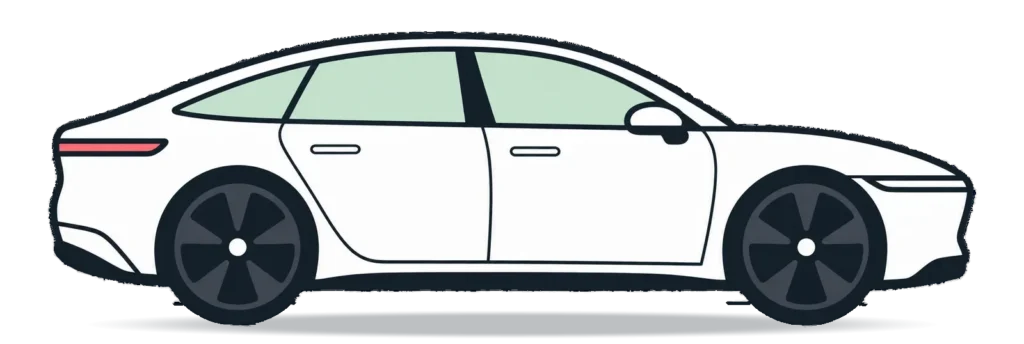
The Tesla Model S is a fully electric saloon from Tesla, listed on Plugbase in 2 versions. Official WLTP range is 373–394 miles.
- Body
- Saloon
- Seats
- 5
- On sale in the UK
- Yes
373–394miles
From the shortest- to the longest-range version of 2.
Real world 261–355 miles, winter to summer
- Rapid charging DC peak
- up to 250kW
- Home charging AC max
- up to 11kW
- Power
- 504–932kW
- Cost per mile home
- about 10.4–11.1p
Versions
How far it goes
Charging
- Max AC charging
- up to 11 kW
- Peak rapid (DC) charging
- up to 250 kW
Charging speed depends on the charger, battery temperature and charge level. See charging at home and charging on the go.
Running costs
Getting one through work? See what it would cost on your salary with EV salary sacrifice.
Tesla Model S MOT record
Fails its MOT less often than the average car of the same age. Based on 78,632 MOT tests of the Tesla Model S in Great Britain since May 2018. Cars get their first MOT at three years old, so these figures describe earlier versions, not the newest one.
Fail rate and mileage by age10 age groups · show table
| Age at test | Tesla Model S | All cars | Petrol | All EVs | Typical mileage |
|---|---|---|---|---|---|
| 2–3 yrs | 10.2% | 10.9% | 9.2% | 11.4% | 30,000–35,000 |
| 3–4 yrs | 11.5% | 12.5% | 11.0% | 12.0% | 35,000–40,000 |
| 4–5 yrs | 12.6% | 14.2% | 12.9% | 13.2% | 45,000–50,000 |
| 5–6 yrs | 14.1% | 16.1% | 14.9% | 15.0% | 55,000–60,000 |
| 6–7 yrs | 14.9% | 18.0% | 16.8% | 16.7% | 65,000–70,000 |
| 7–8 yrs | 17.0% | 20.0% | 18.8% | 19.4% | 75,000–80,000 |
| 8–9 yrs | 18.7% | 22.1% | 21.1% | 21.4% | 85,000–90,000 |
| 9–10 yrs | 20.5% | 24.0% | 23.2% | 22.9% | 95,000–100,000 |
| 10–11 yrs | 21.1% | 25.9% | 25.1% | 23.7% | 105,000–110,000 |
| 11–12 yrs | 21.8% | 27.5% | 26.9% | 24.3% | 115,000–120,000 |
Most common MOT advisories
- Tyre worn close to legal limit/worn on edge
- 19.4 per 100 tests1.2× the typical car
- Brake disc worn, pitted or scored, but not seriously weakened
- 5.7 per 100 tests0.8× the typical car (less often)
- Brake pad(s) wearing thin
- 5.6 per 100 tests0.7× the typical car (less often)
- Suspension arm pin or bush worn but not resulting in excessive movement
- 5.3 per 100 tests1.9× the typical car
- Suspension arm ball joint has slight play
- 3.9 per 100 tests5.7× the typical car
- Tyre has a cut but not deep enough to reach the ply or cords
- 3.0 per 100 tests2.2× the typical car
An MOT checks brakes, tyres, suspension, lights and structure. It does not test battery health or range. Typical mileage is the median odometer reading at the test. Advisory explainers and repair prices are on PriceMyRepair.
Tesla Model S: common questions
How far can the Tesla Model S go on a full charge?
The official WLTP range of the Tesla Model S is 373–394 miles, depending on the version. In everyday driving, Plugbase estimates about 336–355 miles in summer and 261–276 miles in winter.
How fast does the Tesla Model S charge?
It can charge at up to 250 kW on a rapid DC charger; at home or on a public AC charger it accepts up to 11 kW, depending on the version.
How much does it cost to charge the Tesla Model S?
Charging at home costs about 10.4–11.1p per mile. These are Plugbase estimates on a standard tariff.
How many versions of the Tesla Model S are there?
Plugbase lists 2 versions of the Tesla Model S. You can compare them side by side in the versions table on this page.
Is the Tesla Model S fully electric?
Yes. The Tesla Model S is a battery electric car (BEV): it has no petrol or diesel engine and is charged from the mains or a public charger.
Compare the Tesla Model S with rivals
Compare with any carSimilar cars to consider
See all
More from Tesla
All Tesla models
Guides for electric car drivers
Last updated 28 November 2026


