 BMW
BMW i4
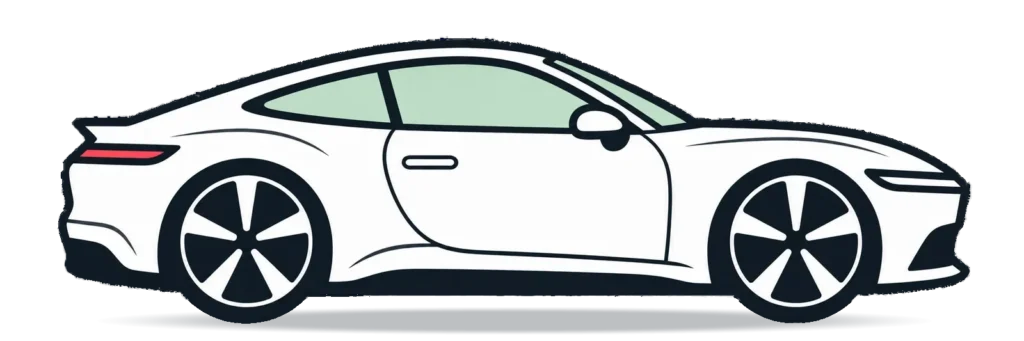
The BMW i4 is a fully electric coupe from BMW, listed on Plugbase in 6 versions. Official WLTP range is 311–381 miles.
- Body
- Coupe
- Seats
- 5
- On sale in the UK
- Yes
311–381miles
From the shortest- to the longest-range version of 6.
Real world 218–343 miles, winter to summer
- Battery usable
- 67.1kWh
- Rapid charging DC peak
- up to 205kW
- Home charging AC max
- up to 11kW
- Power
- 210–601kW
Versions
eDrive35 WLTP range311–319 mi Power210 kW 0–62 mph5.8 s 2 variants
eDrive40 Longest range WLTP range371–381 mi Power250 kW Rapid chargingup to 205 kW 2 variants
How far it goes
Charging
- Max AC charging
- up to 11 kW
- Peak rapid (DC) charging
- up to 205 kW
- Home charge 10–80%
- 7.1 hours
- Home charge 0–100%
- 10.1 hours
- Charging socket
- CCS2
- Socket position
- Rear right
Charging speed depends on the charger, battery temperature and charge level. See charging at home and charging on the go.
Running costs
- Full charge at home
- £19.62
- 10–80% at a rapid charger
- £40.54
Getting one through work? See what it would cost on your salary with EV salary sacrifice.
BMW i4 MOT record
Fails its MOT more often than the average car of the same age. Based on 14,172 MOT tests of the BMW i4 in Great Britain since May 2018. Cars get their first MOT at three years old, so these figures describe earlier versions, not the newest one.
Fail rate and mileage by age2 age groups · show table
| Age at test | BMW i4 | All cars | Petrol | All EVs | Typical mileage |
|---|---|---|---|---|---|
| 2–3 yrs | 14.5% | 10.9% | 9.2% | 11.4% | 30,000–35,000 |
| 3–4 yrs | 12.2% | 12.5% | 11.0% | 12.0% | 35,000–40,000 |
Most common MOT advisories
- Tyre worn close to legal limit/worn on edge
- 22.2 per 100 tests1.5× the typical car
- Tyre has a cut but not deep enough to reach the ply or cords
- 3.9 per 100 tests2.8× the typical car
- Tyre slightly damaged/cracking or perishing
- 2.7 per 100 tests0.4× the typical car (less often)
- Tyre slightly damaged
- 1.6 per 100 tests3.0× the typical car
- Brake disc worn, pitted or scored, but not seriously weakened
- 0.5 per 100 tests0.1× the typical car (less often)
- Road wheel slightly distorted
- 0.4 per 100 tests0.8× the typical car (less often)
An MOT checks brakes, tyres, suspension, lights and structure. It does not test battery health or range. Typical mileage is the median odometer reading at the test. Advisory explainers and repair prices are on PriceMyRepair.
BMW i4: common questions
How far can the BMW i4 go on a full charge?
The official WLTP range of the BMW i4 is 311–381 miles, depending on the version. In everyday driving, Plugbase estimates about 280–343 miles in summer and 218–267 miles in winter.
What size battery does the BMW i4 have?
Usable battery capacity is 67.1 kWh (figures for 2 of 6 versions so far).
How fast does the BMW i4 charge?
It can charge at up to 205 kW on a rapid DC charger; at home or on a public AC charger it accepts up to 11 kW, depending on the version.
How much does it cost to charge the BMW i4?
A full charge at home costs about £19.62 (figures for 2 of 6 versions so far), or about 8.5–9.9p per mile. These are Plugbase estimates on a standard tariff.
How many versions of the BMW i4 are there?
Plugbase lists 6 versions of the BMW i4. You can compare them side by side in the versions table on this page.
Is the BMW i4 fully electric?
Yes. The BMW i4 is a battery electric car (BEV): it has no petrol or diesel engine and is charged from the mains or a public charger.
Compare the BMW i4 with rivals
Compare with any carSimilar cars to consider
See all
More from BMW
All BMW models
Guides for electric car drivers
Last updated 28 November 2026


